
Virse helps creative agencies, identity designers, and founders translate written briefs or live website URLs into cohesive visual brand concept boards combining logo directions, color palettes, and typography pairings.
United States, 10th Nov 2026 – Virse gives brand identity designers, boutique creative agencies, and startup founders a dedicated AI brand kit generator inside its node-based Creative Canvas. Designed to translate a written creative brief or an existing website URL into structured visual concept boards, the workflow brings logo directions, color palettes, typography pairings, and real-world application previews onto one connected workspace.
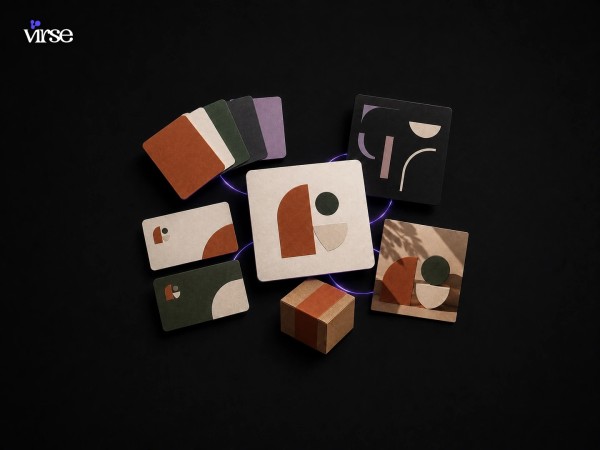
Early-stage identity projects often stall between the written strategy deck and the first visual presentation. When a founder or marketing lead asks what is a brand kit in practical terms, they are looking for how a mark, a color system, a headline typeface, and a photography mood actually hold together on real surfaces. Yet in many studios, those pieces are assembled in separate silos: color swatches sit in a slide deck, font specimens live in a PDF, and mockups are scattered across browser tabs. If a client sitting in a pitch review likes the warm terracotta palette from Direction A but prefers the geometric wordmark from Direction B, the designer usually has to adjourn the meeting and spend another day rebuilding the presentation boards.
Virse resolves that disconnected workflow by turning the brand kit generator into an interactive node on an infinite canvas. Instead of generating isolated logo icons on white backgrounds, the tool composes cohesive identity boards where wordmarks, accent colors, typographic hierarchy, and lifestyle textures appear together in context.
Starting from a live website URL or a plain-language creative brief
Different identity projects start from different places. A seed-stage company launching a specialty coffee roastery may only have a two-paragraph positioning brief and three reference photos, whereas an established B2B software company planning a visual refresh already has a live domain with existing brand equity.
Virse supports both starting points inside its branding kit generator workflow. For new ventures, founders and agency art directors can enter the company name, industry positioning, target audience, and visual tone in plain language, or attach reference imagery directly on the canvas to guide the initial concept board. For rebrands and visual refreshes, teams can point the tool at an existing website URL to extract current visual signals and branch modernized palette and typography alternatives side by side.
Because Virse integrates 50+ leading AI models alongside its in-house aesthetic model, designers can generate three or four distinct brand kit examples on parallel nodes, comparing a minimalist Swiss-grid direction against a warm editorial or heritage craft direction on the same screen. Once a team lands on a direction that fits the brief, Virse’s Aesthetic Memory captures that visual language. The chosen color relationships, lighting sensibility, and compositional tone stay active in the workspace so subsequent campaign visuals do not drift off-brand.
“An identity pitch succeeds when the client can immediately see how the logo, palette, and typography behave together in the real world,” said a spokesperson for Virse. “Virse gives designers and founders a connected canvas where they can explore multiple brand directions side by side, mix and match the strongest elements, and carry the approved aesthetic straight into downstream assets.”
Extending a brand concept board into stationery, packaging, and campaign photos
In a real launch schedule, approving the identity board is just the starting gun. Within days, the team needs stationery for trade shows, product illustrations for the website, carton previews for retail buyers, and color-matched photography for social channels. Virse’s node-based architecture lets designers pipe their approved brand identity generator board directly into specialized production tools on the very same canvas.
Drawing a connection line from the approved brand board, designers can open the business cards generator to test how the primary wordmark, brand colors, and contact hierarchy read across front-and-back card proposals. When a brand manual or landing page calls for minimalist product diagrams instead of heavy studio photos, teams can use the workflow to extract line art from image files, turning product snapshots into clean contour illustrations that match the brand’s visual restraint.
Once the graphic designer applies the new palette and typography to a flat carton layout, they can pass that flat file into the 3d box mockup tool to show stakeholders how the identity wraps around a folded retail box or mailer. To keep launch photos aligned with the brand board’s mood, art directors can also run a reference color transfer pass on the workspace that applies the warmth and shadow contrast of the brand’s hero reference image across every studio product shot.
At any point in the workflow, designers can call on Virse Composer to refine layout details in plain language, and store approved boards and reusable Smart Nodes inside shared Asset Folders for team-wide access.
Four steps to build a brand concept board on Virse
Teams using Virse to develop or refresh a visual identity follow a clear four-step process on the canvas. First, they enter a live website address for a brand refresh, or write a short brief describing the brand name, sector, and visual character. Second, they attach moodboard photos, reference palettes, or rough sketches on the canvas. Third, they run the tool across canvas nodes to review identity boards showing logo concepts, color swatches, type pairings, and application previews side by side, before using Virse Composer to iterate on the strongest board and lock the approved palette into Aesthetic Memory.
Virse maintains clear boundaries around what the tool delivers. The AI Brand Kit Generator produces 2D visual concept boards for creative exploration, pitch alignment, and mood direction. It does not output packaged vector master files (such as print-ready AI or EPS corporate manuals), perform legal trademark searches, or grant commercial font licenses. Once stakeholders sign off on a visual direction, identity designers finalize vector kerning and font licensing in their standard production tools.
Brand strategists, startup founders, and creative directors can generate their first identity concept boards on virse.ai with 200 free compute credits included upon registration. Pro, Max, and Business plans unlock higher monthly credit budgets and multi-seat studio collaboration for teams up to 50 people.
About Virse
Virse is a professional AI creative system built in Dover, Delaware, by a founding team of AI researchers and designers recognized with over 100 international design awards. The platform unites a node-based Creative Canvas, Aesthetic Memory, Virse Composer, and more than 50 generative and specialized design models in one workspace. Creative agencies and brand studios use Virse to align identity direction, packaging previews, and campaign visuals without losing context across tools.
Media Contact
Organization: Virse
Contact Person: Virse Media Relations
Website: https://www.virse.ai/
Email: Send Email
Country: United States
Release id: 50593
View source version on King Newswire:
Virse Turns Creative Briefs Into Visual Concept Boards With AI Brand Kit Generator
Disclaimer: The views, suggestions, and opinions expressed here are the sole responsibility of the experts. No Guardian Talks journalist was involved in the writing and production of this article.